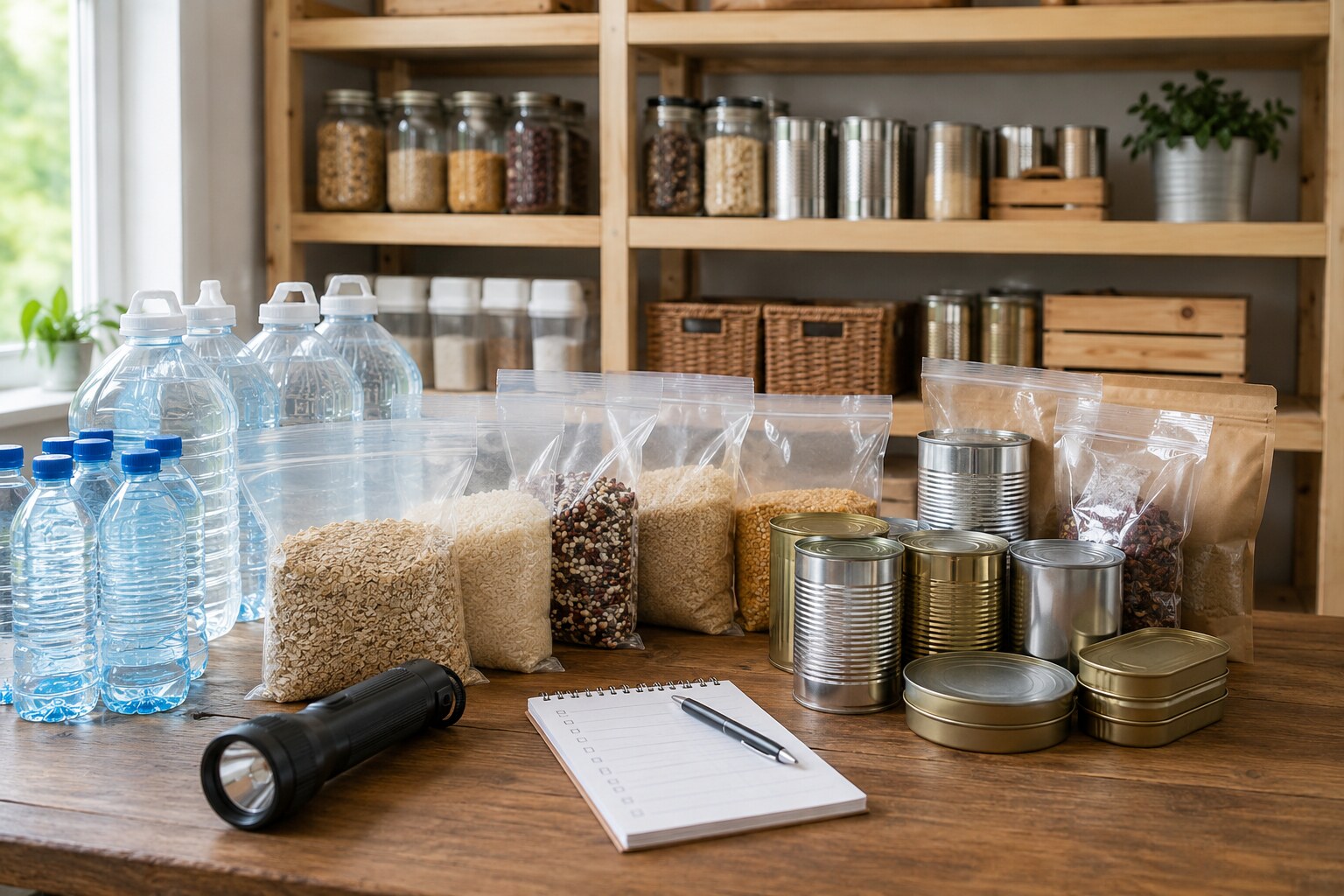
A home food supply isn’t just for major crises. It can be helpful during power outages, storms, illness, supply chain disruptions, or other situations where going to the store or normal cooking isn’t possible for a while.
The easiest way is to start small and systematically: determine how many days you want the supply to last, consider the needs of your household members, and choose foods you actually eat.
How many days’ worth of food should you stock up on?
Start with the question: how many days does the supply need to last? Then multiply the number of days by the number of people in the household and the planned number of meals. For example, a seven-day supply for one person means 21 main meals, assuming three meals a day.
For children, the elderly, and people with special needs, you must consider suitable products, medications, and specific food preparation requirements. Don’t forget food and water for your pets.
1. Choose foods with a suitable shelf life
Prefer products that can be stored at normal room temperature and whose storage conditions suit your home. The supply can include canned goods, grains, dry goods, ready-to-eat meals, and freeze-dried meals.
Check expiration dates occasionally and use older products before newer ones. The simplest system is to place freshly bought items at the back of the shelf and use from the front.
2. Think through food preparation
During a power outage, the stove, kettle, or microwave might not work. Therefore, the supply must include both foods that can be eaten without heating and a solution for heating water. Alternative heating equipment should only be used according to the manufacturer’s instructions and safety requirements.
If a meal requires hot water, write down the amount of water and preparation time in your supply plan. This way you can assess if the available water and fuel are sufficient.
3. Consider energy and variety
A food supply shouldn’t consist of just one product. Combine breakfasts, soups, main courses, snacks, and drinks. Check the packaging for portion size and the content of energy and basic nutrients.
Variety is also important for practical reasons: if one product isn’t suitable or runs out, other options remain. Only add products to your supply whose ingredients and allergens you have checked.
4. Plan drinking water separately
Along with food, there must be drinking water. For dry and freeze-dried meals, account for the additional water needed for preparation. Write down the amounts, as it’s impossible to estimate total water needs based only on the number of packages.
Regularly check water containers and their storage conditions. If you use water purification tools, make sure you know how to use them correctly before a crisis occurs.
5. Keep the supply organized
A single shelf or a clearly marked box makes checking the supply easier. Add a list of products, quantities, expiration dates, and necessary preparation tools. Update the list every time you use or add something.
Pre-packed emergency food supplies
A pre-packed solution can simplify meal calculations, but even with a ready-made kit, you must check the number of portions, ingredients, allergens, water requirements, and preparation instructions. For a one-person seven-day kit, see if it covers the planned 21 main meals or needs supplementing.
Emergency supply checklist
- number of days and people;
- sufficient number of main meals;
- drinking water and water needed for food preparation;
- food that can be eaten without heating;
- a safe alternative for heating water;
- necessary openers, dishes, and utensils;
- medications, hygiene items, and pet supplies;
- regular check of expiration dates.
Frequently Asked Questions
Do I have to buy the emergency supply all at once?
No. You can start with a one-day supply and increase it gradually. This way, costs are better distributed, and you can choose products that the household actually uses.
Is freeze-dried food suitable for an emergency supply?
It can be a practical part of the supply because it’s lightweight and has a long shelf life. You need to account for the water required for preparation and the possible need for heating.
How often should I review the supply?
Check it regularly and always after using any product. A good rhythm is to link the check to a specific date or a seasonal activity.
Summary: A functional emergency food supply is based on realistic calculations, not random purchases. Determine the number of days and people, plan food along with water, and keep the entire supply organized and rotating through use.